White privilege — until recently, I never thought of it for myself, being a white American female born to white parents from St. Louis, Missouri. White supremacy — oh, yes, I was always very much aware of that, having lived in Alabama since the age of six months when my family was moved by the GM&O Railroad from Chicago, Illinois, to Mobile, Alabama. I remember the “Whites Only” and “Colored Only” signs from an early age, but I do not remember hate talk or racist talk in my own family, as we were not Southerners. But trashy talk about Negroes was pervasive, and can bubble up from somewhere even to this day in my mind, and it disgusts and frightens me when these thoughts appear in my consciousness.
I have some memories that are still quite clear, such as riding the city bus after school was out at 3:00 in the afternoon. During junior high school, we would catch the bus on Government Street in downtown Mobile. I attended a public school, Barton Academy, and we rode the public buses home in the afternoon the six or seven miles to where I lived outside of downtown Mobile, since I was not in the school district for the more affluent, but went to closer schools in the Springhill area. And if my memory is accurate, which I think it is, there were no people of color on the buses, at least not any students. But I would see them on the sidewalks walking home from school, and I remember that some of the white students on the bus would call out names to them, ugly names. I knew this was wrong, but did not know what to do or say and felt powerless to change this name-calling. This memory has stuck with me all these 50-plus years.
And then Murphy High School was integrated in the spring of 1964, during my senior year and after John Kennedy was assassinated in November 1963. What a year, preceded by George Wallace, our “esteemed” governor, standing in the schoolhouse door at the University of Alabama to take a stance against the university being integrated. Also there was the bombing of the Sixteenth Street Baptist Church in Birmingham the same fall prior to the assassination of President Kennedy. I recall hearing of these events on the radio and on the CBS Evening News with Walter Cronkite as the anchorman. I was appalled at these events, but again, I lived in Mobile, away from the violence and Civil Rights protests that occurred in Birmingham and elsewhere, and was not directly involved.
And so, Murphy High School was integrated with, if I recall, three students. And the National Guard or police were present to “keep the peace.” I am not aware of any overt actions against the Negro students, at least no violence, but there was the usual name calling done quietly. I heard it in the hallways — long, wide hallways and wide wooden stairways with rails, rooms with tall ceilings and open windows, because there was no air conditioning. But silence was primarily the method of isolation afforded those brave young people who were willing to be on the front line of integrating the largest high school in Mobile. I recall feeling badly for them, but again, I did not know how to reach out to them in the hallways since not one of them was a student in any of my classes.
Years later I taught high school in Centerville, Alabama, during the 1968-1969 school term. It was a job for which I was not well prepared since I did not take education courses at the University of South Alabama, but rather majored in biology with minors in chemistry and math. I did, however, see white privilege and overt racism during this school term, because the school was integrated with seven brave young students. During study hall one day, I looked up from my desk to see a well built football student standing up with his portable desk held high over his head and aimed at a much smaller and younger female black student. His presumable intent was to clobber her with the desk, but I saw him before he could do so, stood up between him and the black student and told him that he would have to hit me first. Needless to say, this interrupted his planned aggression, and we were then all shepherded, one by one, into the office of Mr. Kornegay, the principal. I was questioned about the incident, but do not recall any comment that the white athlete would be held accountable or reprimanded in any way. I did not return to teach high school the following fall term. I found a way to get a scholarship to attend the University of Alabama in Tuscaloosa as a graduate student majoring in microbiology. I was grateful that this was the end of teaching high school for me!
My journey to understand more about my own white privilege is only fairly recent as I have been witness to Black Lives Matter and have heard and seen on television and the internet the police killings of primarily young black males. I am appalled by the current climate of racism after the election of our country’s first African American president, Barack Obama, and the resultant backlash against him. It’s couched in political rhetoric, but really is the result of his having more pigment in his skin, of being a black man. And now, the present administration of Donald J. Trump has resulted in an escalation of racist extremism and neo-Nazism in our country. So I am taking a look at the privileges that come with having white skin and having been born in a middle class home, although not wealthy by any means. As a white person, I had the privilege of living in a stable neighborhood and of attending fairly decent public schools. I now see clearly that this was a supreme advantage that my counterparts with darker skin did not have the opportunity to enjoy due to Jim Crow laws that created and maintained segregation, and the resulting limited educational, job, and housing options.
So what can I do personally? I can make a long term commitment to being sensitive to people of color in this country, to making my voice heard, to being present, to showing up. Show Up for Racial Justice — this is my task. Making a difference not only with public witness, but also on an individual basis as the opportunity presents itself. But more than this, I must do all that I can to challenge and change systemic racism as it exists in our country and especially in Alabama, where George Wallace exported his brand of hatred to the rest of the nation when he ran unsuccessfully for president. That means voting, attending rallies, writing letters, giving financial support, and making my voice heard. It means making my own children aware of their white privilege and of the importance of being sensitive to those without this privilege. This is a task that surely I shall not see accomplished in my lifetime, but I do hope my one voice and presence can and will make a difference. As Martin Luther King, Jr. spoke so eloquently, “I look to a day when people will not be judged by the color of their skin, but by the content of their character.”
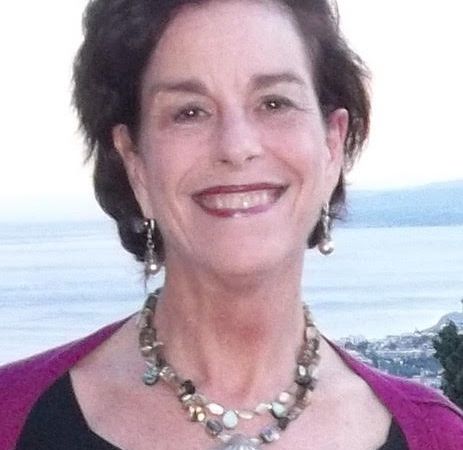
Mary J. Wade, Birmingham, Alabama
September 2017
 The Threshold Project