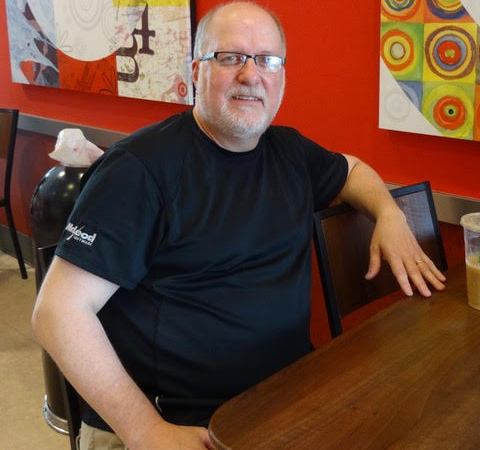
Al Rees, interviewed by Judy Hand-Truitt
Interview conducted June 2, 2018
Edited for length and clarity.
Each story in our collection is unique. We suggest a template for the stories — how did you move from point a to point b on the issue of race; what did it cost you to take a stand for justice; and what did you gain. As we receive more stories, we’re learning that not all stories fit a template. Especially if you were raised in a liberal or progressive household, you may have traveled quite a different route to being vocal and visible for racial justice. (And we want all kinds of stories.)
Still, people raised in conservative or fundamentalist homes often do come the route suggested by our template — you have an awakening; you make your altered outlook known and as a result you lose something that was very dear or important to you; and, finally, you are surprised to find yourself living a life more meaningful and rewarding than you had imagined you would have and that you would not be living had you remained in your earlier restricted thinking or had remained silent.
Al’s story is such a story. Not only does he have a memorable awakening, his story highlights the interconnectedness of related oppressions, particularly the linked oppressions of racism and homophobia. — editors
A: To me, it was always kind of strange how my parents changed from the generation before them. My father was from Iowa, my mom from Thibodaux, Louisiana. After my dad died, his brother said that he could never understand the views my dad came to hold, since their family had been democrats and very liberal.
When my parents moved down to Thibodaux, my dad started hanging around with my mom’s family, her brothers and sisters, and they were very racist, very homophobic, very conservative. My dad was just an absolute racist after that. He became just like my uncles. My cousins, I’ve seen them tease this guy because they said he was gay, and they teased him to the point where he was in tears and ran off, as adults. And blacks too, you know — it was just they weren’t white, straight males. That was their thing.
So I was raised in this atmosphere of racism, just complete. The n-word was nothing around my house. My dad said he wanted George Wallace to become president because he was going to send the n_____s back to Africa. So I go to school and I’m parroting this to my friends. But at the same time there’s a little black kid at school that I dearly loved hanging around with and playing with, elementary school kids, not putting the two together — here I am saying this stuff, and then here’s a good person that I’m around. So that was kind of the atmosphere I grew up in.
In high school, I went to a Klan rally. It was not a big deal. We went there, they fed us, they gave us a bunch of literature. I take this literature and I keep it, and I get to college, and I show, hey, I went to a Klan rally. It was almost a point of pride with me at that point. My brother was a Klansman, and an organizer for them too.
When Obama won his first time, I made a comment on Facebook, Finally we can get to turning this into a Muslim, Sharia-law-loving, Communist — everything they had said along the way about Obama —country. It was a joke. I was making a joke, and my family started disappearing. They started disappearing, and they haven’t talked to me since then.
I think what it is, is my family has to have someone that they’re against. They have to have someone that they’re talking bad about and treating bad. When they did that with me, I said, well, that’s your choice and you make your choices. I have a wonderful life, and if you don’t want to be part of my life then that’s your choice. I can’t stop you or change that.
J: Tell me some about your emerging into a different kind of consciousness.
A: I had gone to college and flunked out. I left and worked at a gas station, I was a security guard, I was a policeman for three years. I remember going on a call as policeman — this guy was standing outside of a bar. We were getting noise complaints from this bar, and it was a black bar. We go there and this guy is standing out front, not making any noise, not doing anything wrong, and my partner says, you have to go inside. And he goes, I’m waiting for a ride and they told me to wait outside for them. And he said, you have to go inside. And he goes, they’ll be here any minute. And just like that my partner grabbed him, slammed him down on the car, and I’m just standing there, I’m not doing anything. I get to work the next day, and my sergeant, who was black, went to that club and he was there. And he says, you need to stop hanging around him. He’s a racist and he’s going to eventually get you in trouble. This was a man I really respected, a black man. He said, What he did was wrong. I said, Yeah, I felt that too.
I think that was my mom, that was my mom inside. The other side was my dad. I eventually lost respect for my dad, because he had the opportunity to be a much better person.
J: What do we do with that, Al? It’s a lifelong wound to lose respect for a parent.
A: Essentially what you have to do, you have to stop that mentality of family is the most important. You have to say that all people are important. Whether they’re your family or your friends or some stranger, you have to think of people as people. That’s how I do with my family ‘cause nobody talks to me any more. They’ve pretty much dropped communication with me.
J: Do you think of it in terms of, it continues to be painful to have lost an original family but what you discover is that the whole world is your family?
A: That’s exactly it. I’ve got my boys, I’ve got my best friend John — we’ve known each other for forty years — and other people in my community that are just good, decent people. People — I call them the Birmingham people — the Max’s, the Julia’s, all these wonderful people out there. I’ve learned that I have to stop identifying with people as family, and identify with people as good people and bad people, and I gravitate towards the good people, and that has fulfilled me.
There are incidents that were turning points. One of the first I remember was an argument I had with Mary about something I heard on Rush Limbaugh. Three black guys had beat this person to death, and I’m telling Mary, these people are animals, they need to hang them, they need to be cut from the herd. All this talk that Rush Limbaugh would say, I’m parroting. And she’s going, no, you’re wrong. And we got kind of heated about that whole thing, and I think that was in the back of my head.
And then, Addison was born roughly a year after we moved here. I started kind of getting these mixed thoughts, mixed feelings. I was watching a documentary on coal miners, and this guy was just crying and he said the hardest thing for him in his life was when his children said they were hungry and he couldn’t feed them. And I’m saying, that could be me one day. I could be in that situation, trying to feed my children, ‘cause here I was, trying to keep this thing alive — that was my main thought, I’ve got to keep it alive — and I’m responsible now. So I empathized with that guy, had that emotion of, yes, you’re right, what if I couldn’t take care of him. We need those safety nets, we need those places where people can go.
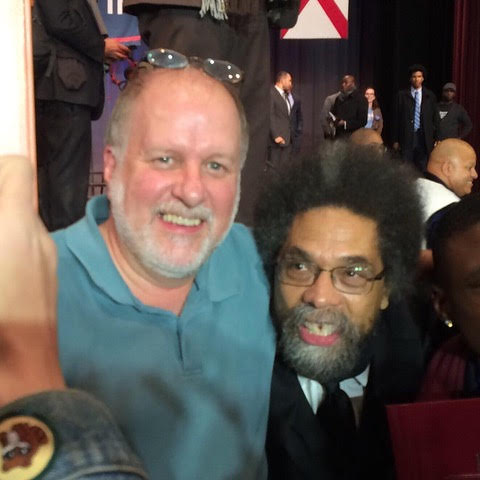 So I started getting empathy for the poor. And then one day Cornel West came on C-Span. I always watched C-Span and I started watching State of the Black Union. My philosophy was that you have to know what your enemy is doing so that you know how to combat that. Cornel West comes on, and he’s sitting next to Jesse Jackson, and Jesse was saying, black people need to take care of the black community, and Cornel West sitting right next to him, and he says, I agree with Brother Jackson, black people need to get insurance. White people get insurance and when they die their family has a little something to set up with. We need to start working on helping people to do the things that white people are doing, because they’re not going to help us. We need to love everybody, we need to love the black people too, we need to help them get out of poverty and move forward, and we need to be community leaders. And it was just honest love and truth that came from him. And I started thinking, he’s right, he’s absolutely right. We need to work together, we all need to come together. No one is better than anyone else at this point, and that was kind of my moment.
J: Wow, you should let Dr. West know.
A: Well, here’s the good part. I get to the Bernie Sanders rally. John Killian, he’s a Birmingham person and he was one of the people that was working the Bernie rally. I had broken my foot and I had a cast and was on crutches. When we get there, there was a line, and I tried to go all the way to the back of the line and John messaged me saying, where are you? I said, we’re way at the back of the line. So he comes back there and he goes, come on, come with me. So he got us through and he got us in the handicapped section. It was me and Addison and my buddy John. We’re sitting there and all the speakers are coming out and this woman comes out and says, now we have a special guest, and I thought it was going to be Bernie, so I’m so excited, and here comes Cornel West and it blew my mind. So after it was all over with, people were kind of crowding around, so I just kept making my way, excuse me, using my handicap to get up there, and I got up next to him and I said, can I get a picture? And he said, yes. And so I took a picture, and I said, Brother West, I just want to let you know that you changed my life. I came from an extremely racist, conservative family, and when I saw you on C-Span, that flipped me, and you changed my life. And he grabbed me and he hugged me and I was bawling, and he just said, I love you, brother, I love you. And he just wouldn’t let go of me, he was just taking his time, and he held on, he held onto me for a long time telling me, I love you, I love you. And that was the pinnacle of my life.
J: It’s fascinating that there was a time in your life when you crossed over from being a Rush Limbaugh listener and taking what he said to be true, and then not too long after that you had certain eye-opening experiences or challenges to your thinking, that just gradually but then sort of with a break-through, led you to a very different view of the world.
A: And that’s the thing — thinking, you know, not just accepting, but thinking on my own and saying, I don’t care who you are, you could be wrong, as far as what I believe is right and wrong. My sister said, we’ll always have race because we always want to be on a team, and it’s ok to have your team. I took that and rearranged it and said, no, it’s not ok to have your team. We need to become civilized. Continuing to be more and more civilized is to drop that team mentality and move on.
J: Tell me anything more that you can think of about ways in which you let it be known that your thinking was changed. I’m getting to the question of, what did it cost you to come to a different place, and what did you gain by coming to a different place?
A: The biggest cost was my family, my entire family pretty much. All that happened after my mom died. My mom died in 2005, and a lot of this stuff happened around the Obama election. A black man was going to be president and they didn’t like that, and it cost me that family. That was a big deal. These were people that we would see all the time. Every holiday we were going down there and visit them.
We grew up very close, we grew up seven kids all together, we were each other’s friends as we moved around. I would try for years, I would send them a happy birthday message, each one of them, and they would never respond. I’ve called and they haven’t answered their phones.
But the benefits I got out of it is just, it feels so good. It’s that epiphany where people find God or whatever. I’m an atheist, but I think it’s that same kind of epiphany. Suddenly, aahh, this weight’s gone, because I can walk up to anybody and talk to them and feel comfortable, and not feel that they’re any less than me, or be confronted by them or afraid of them.
When Addison was born, I had a pistol that I had when I was on the police department. We were putting in a playground for him, and to put that in, we had to dig post holes and fill with concrete so it wouldn’t tip over. I took that gun and I dropped it in that concrete. I said, I don’t need this any more, that was my old, fearful self. I don’t want to live in fear any more. Fear, the whole thing is fear. Fear is a big motivator. They fear black people, they fear Mexicans, they fear foreigners.
J: Tell me a little about how you feel, if you do, that it’s important for white people to be visible for racial justice. Is it important for white people to let it be known that they’re not gonna be part of that worldview any more, that they are part of the larger human family, and that they want other white people to have this epiphany as well?
A: Speaking up. I was always quiet about it, even after seeing Cornel West and his thoughts, people would say racial things, and I’d keep quiet. Then one day, I came to that point where I said, I cannot shut up. When someone goes (rubbing arm), it’s one of them, I have to say, one of who? Oh, I’m sorry, who are you talking about, I don’t understand. Is that lotion?
This friend of mine, a black guy I work with, he jokes with me. When I say something about somebody doing something, he’ll go like (tapping palm), ‘cause his palm’s white. So we joke about that. And another thing that’s important is to talk to another person, to talk to a black person. Ask them, is this ok, if I were to say this, is this ok? And that’s who he is, he’s my senior black advisor. I’ll go to him and I’ll say, I was thinking this, what do you feel about that?
J: That’s important.
A: It is, and to just be open. When I was at Bellsouth, we had workplace awareness. By this time I had started changing. We had different groups, we had the black group, the Asian group, groups that would get together and talk about things. I was in the white male group. One guy says, one day they want to be called colored, one day they want to be called black. And I said, Ok, so how does that hurt you? If you call somebody black and they say I’d rather you call me an African American, how does that hurt you? Sorry, sure, no problem, from now on I’ll call you African American. If you’re calling someone Bob and they say, no, my name is Joe, I’m not going to continue to call you Bob. It’s just part of being a decent human being.
You cannot be quiet any longer.
I’m an atheist. Many people when I would say I was an atheist, would say, so what are you, a Satanist? And I’d say, no, I don’t believe in him either. But I do things like, I work at the concession stand for the band, I volunteer for band trips and scholar bowl trips. I do things in the community. And people look at me and go, you know what, atheists may not be so bad.
Kurt Vonnegut says, I am a humanist, and being a humanist means that I don’t expect a reward or fear a punishment when I die. Being a humanist is the more pure form, you do things because it’s the right thing to do, not out of any fear or promise of reward, just because it’s the right thing to do.
Even when Addison was little we’ve always had that attitude, that you can’t be mean to people. You have to be kind, that’s what I always told him. Kurt Vonnegut has this thing in the book that when babies are being born, we need to tell them that this is a wonderful place to be, you’ll grow up, you’ll die, and there’s only one rule — dammit, you’ve got to be kind. I think if we’ll do that, that will take care of everything.
We’ve seen men holding hands or kissing, and he’d kind of look, and I’d say, that’s ok, you know, mom and I love each other, and they love each other too. One day you’re gonna choose who you love, and that’ll be ok whoever it is. As long as you’re kind to them and they’re kind to you, that’s all that matters.
I take pride in that. My kids’ friends tell me that they’re glad to be around me because I don’t judge them. They can be gay, they can be whatever they want, they can find themselves, and I take a certain sense of pride in that.
J: It seems to me that you get a lot of your motivation and joy in life from a deep belief in the human family. Having moved from a fearful, tribalistic point of view, to a more universal point of view, I think you just don’t really ever get over the joy of that epiphany.
A: Oh, yeah. Even now, talking about it, I tear up. I think about that point, that switch, the burden is gone. It was a burden that was almost physical, like a tumor was removed or something like that. And I give credit to my kids, listening to them and watching them. Addison talking about the little kid at pre-school, Colin and I are different. So, here we go, you know. Yeah? How are you different? My glasses are round, his are square. Oh, ok. He goes, there’s something else different. I said, here it comes. I said, what’s that? He said, we don’t have a dishwasher and they do. Never did it come out that he’s black and I’m white. And the whole thing about being trans, they have a fresh, uncluttered mind, untainted mind. Unless we taint them, they have no reason to be tainted. And making mistakes with them, saying, I’m sorry, I didn’t know that. Maybe I should think of it this way, let me work on that.
I’ve always loved people, I love to talk, I love to communicate with people. I had a brother that was gay, a brother and sister. My sister committed suicide, my brother died of AIDS. And those were the two, I think if they were alive today we would still be in touch. The last thing my brother said to me before he died, he said, I’ve just got one wish, don’t let George Bush win another term. He helped me get over any kind of homophobia, ‘cause he’s a good person, why would I think any less of him because of who he chooses to love.
After my dad died, I saw Mom blossom a little bit and start to become a different person. When she found out my sister was gay, which was ’78, I was a senior. She kicked her out of the house. My sister a year later committed suicide, fifteen minutes before my mom’s birthday. But when my mom saw my brother was gay, and she was all angry and upset about it, the man she was with at the time — my dad had died and she had met this wonderful man, very conservative but very open-hearted — he told her, when the shepherd lost the lamb, Jesus told them go get that lamb, bring that lamb back, don’t push that lamb away, don’t forget about that lamb. He said, that’s what Jesus did. You don’t need to be angry with him, you need to love him. And she did, she did until he died. She was there, and she helped his partner financially after my brother died.
And when she was in assisted living, not long before she died, she told me, all my life I’ve talked bad about black people, but these women in here, these black women, are taking care of me better than anyone’s ever taken care of me, and they’re doing it out of love. So she had that, and I think that’s maybe where that came from in me.
But I’m just so happy to be where I am now. I feel complete, I feel at ease.
 The Threshold Project