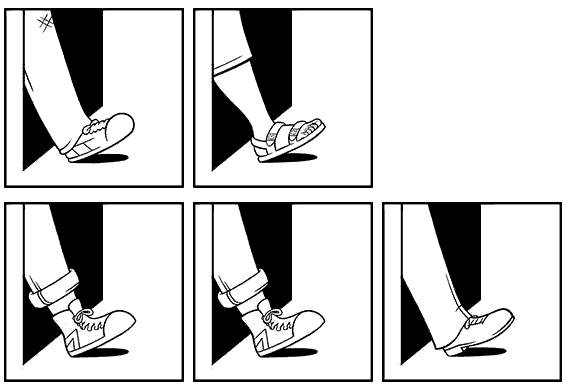

This story can have many beginnings depending on where I wish to start, but there is no ending.
Like many, I was born into a privileged, middle class, white-supremacy-driven ideological family environment. An all-white-suburbia, working-father-and-stay-at-home-mother household. As hard as I try, I can’t recall knowing or even seeing people of color with the exception of a black boy who played on another Little League baseball team, a hispanic brother and sister who played on mine, and of course on TV.
Having a northern/southern family was interesting. I was born in Buffalo, NY. My mother’s side of the family was close by, and there was no negativity that I was aware of, but this didn’t last long — 4 years. My father being a salesman meant that moving was always possible and so we ended up in Kentucky. Living in an all-white middle class area, and going to an all-white private school became the norm. Our family spent many years living in an all-white Kentuckian environment. Anything that dealt with people of color (but that wasn’t the word used) was negative and bad. How can you blame a child for being raised under the roof of racism, sexism, and homophobia, for believing the lies taught, and for being surrounded by other children hearing the same language taught to them?
One more and final move, and we ended up in Birmingham, AL, once again in a white, privileged, racist, middle class, white-supremacist-dominated environment. The thought of all those racist discussions my southern relatives had at their gatherings is downright scary. So much hate for anyone not white, and — hell, they even picked on my white northern mother for being Catholic! Through these times, I myself was still racist, my friends were racist, their parents were racist. I can’t remember anything other than racism and white, white, and white!
I’ve got many personal racist stories, too many to share, and shamed to do so now.
When I was in high school, we used to hang out at Southside at the fountain where the church is. That’s when it was cool, and that’s where all the punks would hang out. The Skinheads would go there and they were together, and they were kind of scary and they meant to be that way. This was before cell phones, but we would meet at ditches and parking lots, and skate and videotape ourselves doing tricks. I lost contact with some of them, lost their friendship. I don’t know if they joined the Skinheads or maybe they got scared and moved on.
One time when I was in college — I went to Jacksonville for a couple of semesters — I had joined a fraternity, just to have fun. Anyone that knows Jacksonville knows there were racist fraternities. The fraternity house was right across the street from a McDonald’s, and one time there was a confrontation between my fraternity and an all-black fraternity, yelling back and forth, and I had a baseball bat. I didn’t use it, but I had it in case something happened. I look back on that, and am ashamed. I want to reach out and find the people that are going through that right now, to be a mentor to them or try to help them, because I had no one to talk to, because my friends were the same.
That is a brief description of the first part of my life. Now here comes the second part, which is ongoing.
Come the age of 24, I decided to drop out of college and take a break. After working some crap restaurant jobs, and, yes, still being racist, I decided to look for something different and ended up working in a nightclub. This is where things started to change, and for the better.
It was at this nightclub where I met someone beyond special. Greg would come into the club and hang out with some girls and act silly, because he was a silly guy, and it was weird because I didn’t even know him, but I didn’t like him. Why? Because he was black.
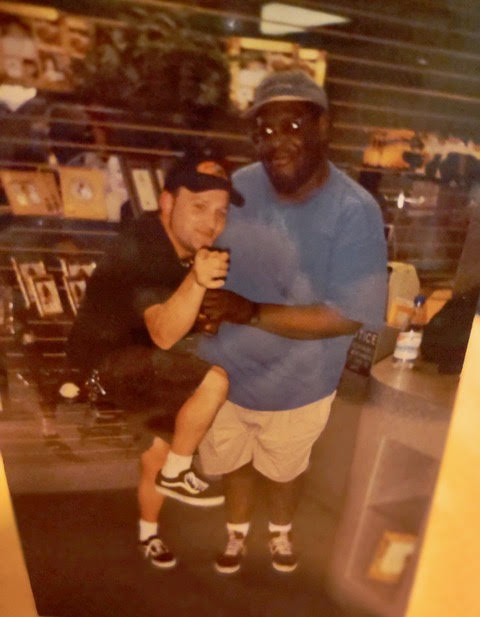
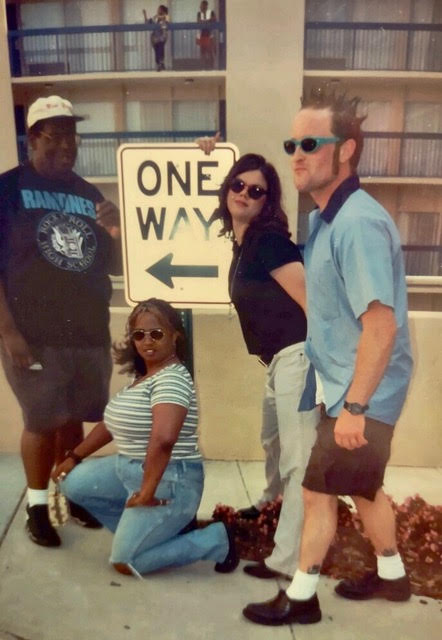
Then he started working at the club. He had worked with the legendary punk band The Ramones. I’ve always been into punk, always loved old school punk. We began talking and getting to know each other, and I loved listening to stories he would tell about The Ramones and other bands. I kept my racism to myself and I’m not sure if he noticed it. If he did, he never said anything.
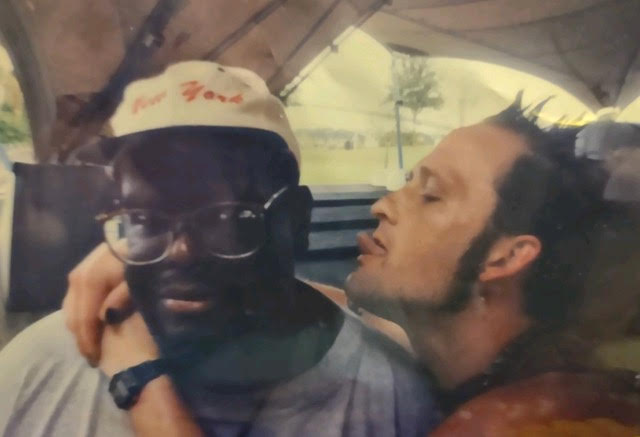
Since he couldn’t drive, I would take him to work, drive him home, take him shopping and other places. I started calling him Pooh because he was one big and special sweet person. Our relationship became so close that he believed I was his younger brother who passed away during their childhood.
I never let him know about my racism until one point when I confessed it to him, and he said he already knew, but he knew I would change. He just had a feeling, and he had patience with me. He was so understanding, he was able to look past that.
We had discussions all the time, and he made me realize, without sitting me down and saying, Johnny, listen, you gotta do this or that, he made me realize that I didn’t know about the other life, other than the one I came from. My life had been like living in a bubble, its own little world, and there’s the outside world I didn’t know about.
He was just a special person, an angel, seriously — not that he was perfect, but he rubbed off the right way. It’s really hard to put into a story just because it’s such a feeling, it’s such a flow, how we got together. But what is most important is the major positive impact Pooh had on anyone he met. He was open-minded, compassionate, understanding, generous, a listener, patient, funny, silly, and serious at the same time. I began to see my racism becoming less and less. Pooh left this world in 2007 but will never be forgotten by anyone who knew him.
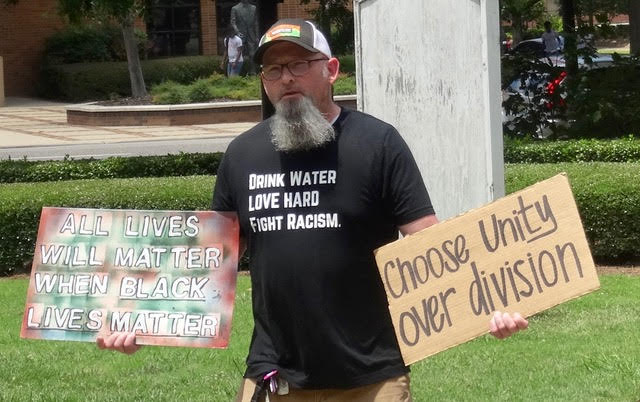
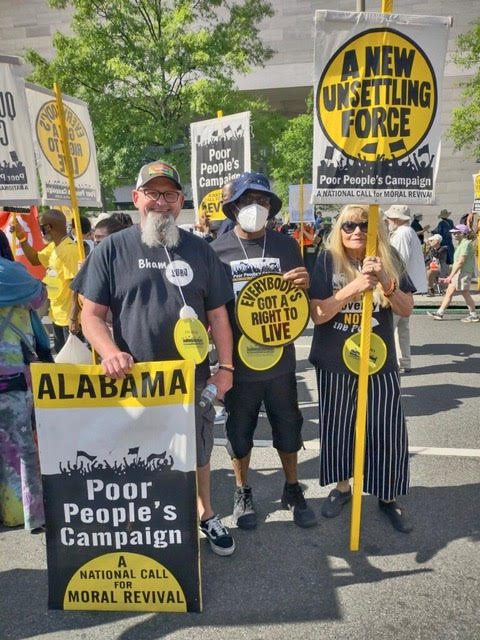
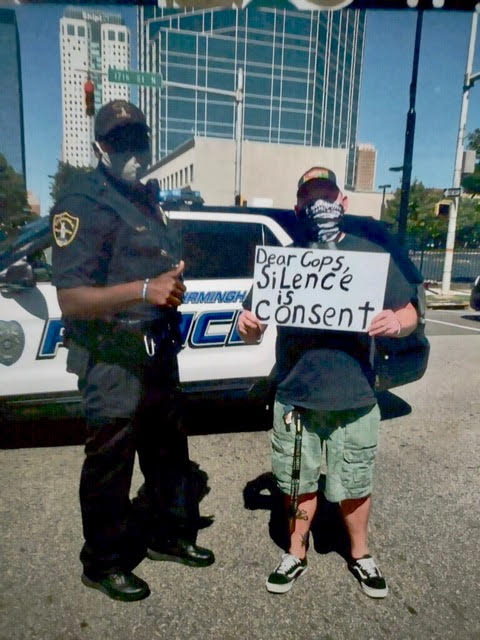
I decided to go back to college and obtained a bachelor’s in Social Work and a bachelor’s in History with concentration on African American studies. I was a member of the student NAACP chapter and did volunteer work in The Birmingham Civil Rights Institute. When I discovered social media, I became involved with many social groups in Birmingham. I am currently a co-founder of the new Birmingham SURJ (Showing Up for Racial Justice) chapter.
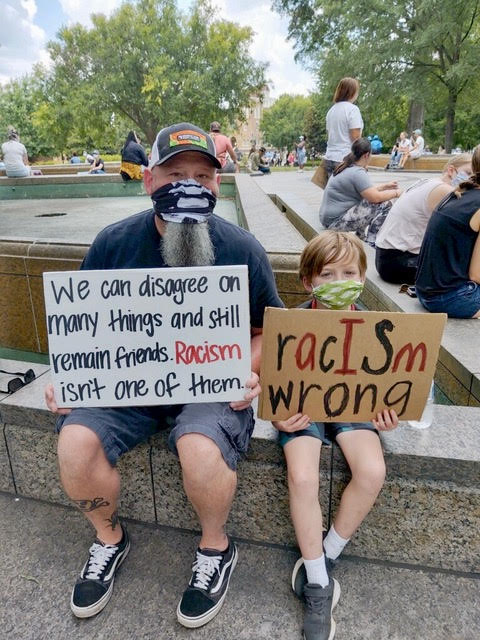
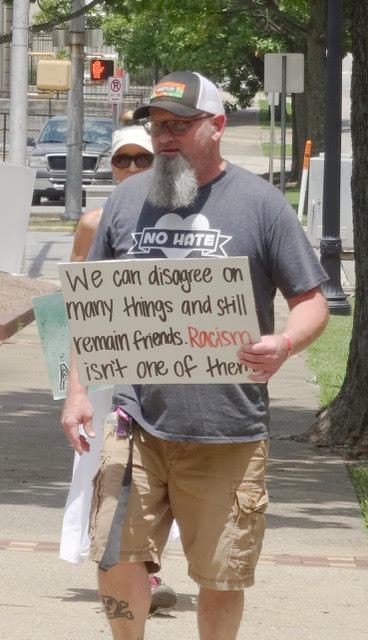
Meeting Greg was the turning point. If I hadn’t met him, I probably wouldn’t be with my wife. I hid my racism from her because I liked her, but she’s smart, and you can’t hide something like that forever without it having an impact on your mental state. So everything kind of worked out. I think my biggest accomplishment is having a family now that’s not going through what I went through. My children have been to protests and rallies with me. When Trump came to Birmingham, my daughter and I went together to protest, and my son has done rallies and marched with me, and he wants to take the sign. It makes me happy. One of their great friends, for both of them, are people of color. I didn’t say, go be friends with them, I let them choose.
Sometimes when I watch something I’ll cry, because I still feel ashamed of myself for the earlier part of my life, but then again, it’s what I was brought up on. My wife reminds me all the time, don’t be so hard on yourself, but I can’t help it. It’ll always be like that.
My experience gives me an understanding of people that have grown up under a racist ideology, sheltered in a bubble. I am as actively involved as I can be, to reach out to people, to be in organizations for social justice. There’s not a lot out there for racism, but my thing is racism. I know there are tons of white people out there who want to reach out to somebody or want to get out, but they don’t know how. My main goal is to inspire other white people to step up and find their voice and their place in the movement to dismantle racism. I am interested in helping white people who want to have a better understanding of (their) racism and to realize it is not good for anyone.
Take care all,
Johnny Scott
 The Threshold Project